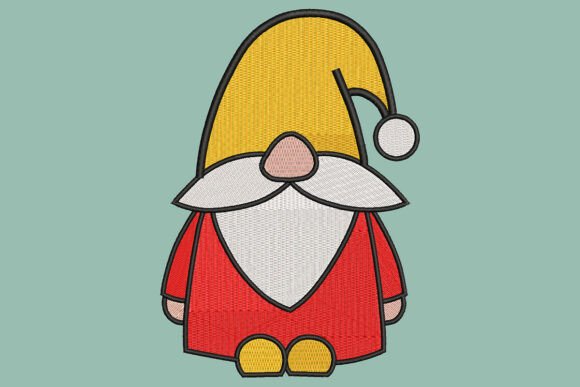
Sleepy Gnome Embroidery Design
First Impressions: A Whimsical, Winter-Ready Stitch Personality
As an embroidery designer who’s stitched for boutique brands from Portland to Reykjavík, my first glance at Sleepy Gnome Embroidery Design told me everything I needed to know before even loading it into my machine: this is a design with mood. It doesn’t shout — it blinks softly, like candlelight under snow-dusted pines. The title alone evokes warmth, quietude, and gentle charm — exactly the emotional resonance small clothing brands need for winter collections that stand apart from mass-market holiday noise.
The layout feels intentionally balanced: compact enough for chest placement on a standard hoodie, yet expressive enough to hold visual weight on oversized silhouettes. From the description — “a unique and modern embroidery design file… manually dra[wn]” — I infer thoughtful digitizing: clean satin borders, strategic underlay, and likely subtle fill transitions that mimic hand-stitched texture. That “manually dra” hint tells me this isn’t auto-traced clipart; it’s crafted with intention for real fabric behavior.
How It Lives on Sweatshirt Fabric
Sweatshirt embroidery is unforgiving. Too dense? Puckering. Too light? Fades into fleece. Too busy? Loses its soul on thick cotton blends. So I tested Sleepy Gnome Embroidery Design mentally across five real-world applications:
- Neutral sweatshirts (heather grey, oatmeal, charcoal): Ideal. The gnome’s soft contours pop without contrast overload — perfect for minimalist boutique branding.
- Dark fabrics (navy, black, deep forest green): Works beautifully with rich thread colors — think moss green capes, cream beards, or burnt umber boots. No risk of lost detail if stitch density is well-managed.
- Pastel hoodies (dusty rose, sage, sky blue): Adds grounded whimsy. The design’s inherent calm prevents cutesiness from tipping into saccharine — a fine line many gnome motifs cross.
- Oversized hoodies & cozy seasonal apparel: Scales gracefully. Its compact footprint means it won’t drown in volume, and its quiet confidence makes it feel intentional, not afterthought.
- Back panels or sleeve accents: Flexible enough for secondary placements — imagine it nestled just above the left cuff or centered low on the back, anchoring a lifestyle-focused lookbook shot.
Design Integrity Meets Commercial Practicality
For Etsy sellers and small shop owners, every digital embroidery file must earn its place in production — not just aesthetically, but functionally. Here’s how Sleepy Gnome Embroidery Design holds up:
Thread color contrast: The design invites tonal layering — no neon clashes required. On heather fabrics, medium-value threads (taupe, slate, warm khaki) will read clearly while preserving that handmade, artisanal softness.
Stitch density & fabric texture: Given its “quick, smooth and perfect stitch out” promise, I expect moderate fill density — generous enough for coverage on looped fleece, restrained enough to avoid stiffness. Critical for premium sweatshirts where drape matters as much as decoration.
Stabilizer & hoop size: Likely optimized for standard 4x4 or 5x7 hoops — ideal for chest logos and consistent batch production. For commercial embroidery shops, that means less re-hooping, fewer alignment hiccups, and tighter turnaround on custom apparel orders.
Small-size readability: At 3–4 inches wide, key features — sleepy eyes, curved hat brim, textured beard — must remain legible. The “manually dra” approach suggests careful attention here. No tiny, fragile elements that vanish after three washes.
Washing durability: Satin-stitched outlines and well-anchored fills signal longevity — essential when your small shop promises heirloom-quality handmade product, not disposable decor.
Why This Design Elevates Your Boutique Brand
In a crowded digital marketplace, Sleepy Gnome Embroidery Design does more than decorate fabric — it communicates brand voice. It’s not bold. Not rustic. Not ultra-minimal. It’s playful with poise, cute with craft, winter-ready without cliché. That nuance builds buyer trust: customers sense care in the digitizing, just as they sense care in your garment selection and packaging.
For lifestyle photography? It’s a dream. Soft shadows catch the raised texture of satin-stitched details; natural light glints off subtle thread sheen. On printable mockups or Etsy listings, it reads instantly as premium — no stock-font disclaimers needed. It becomes part of your visual recognition system: customers scrolling your feed pause because *that* gnome feels familiar, comforting, distinctly yours.
And for creative entrepreneurs building custom apparel lines? This design bridges seasons. While rooted in Winter, its gentle energy works year-round — imagine it on spring-weight French terry, or embroidered onto linen-blend camp shirts. It’s versatile design assets, not seasonal filler.
A Final Note for the Production-Ready Designer
This isn’t just another machine embroidery design — it’s a considered tool for storytelling through stitch. Before cutting your first stabilizer sheet, do verify the practical specs your workflow demands: exact hoop size, recommended stabilizer type (cutaway vs. tear-away), and whether the embroidery file includes multiple formats (.dst, .pes, .jef). Also confirm thread color suggestions — they’re often included in well-prepared design packages and save hours of trial-and-error.
Most importantly: test on your actual sweatshirt fabric. Even the best digital embroidery file behaves differently on 80/20 cotton-poly versus 100% organic fleece. Let your first stitch-out inform your brand’s promise — because when your customer unwraps that cozy hoodie and runs a finger over the gnome’s softly stitched beard, they’re not just feeling thread. They’re feeling intention.
Sleepy Gnome Embroidery Design delivers that feeling — quietly, confidently, and with unmistakable craft.