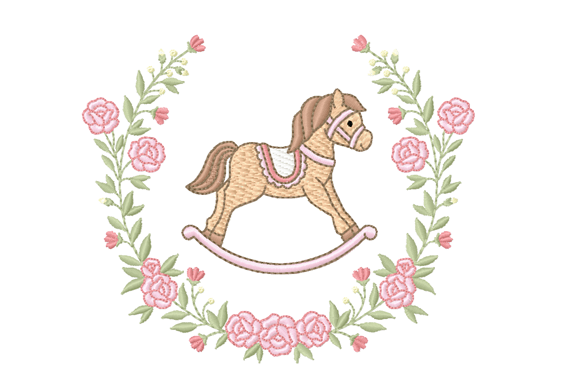
Rocking Horse Floral Wreath Embroidery
A Soft Vintage Charm That Stops Shoppers in Their Tracks
As an embroidery designer who’s prepped over 200 craft fair booths—from Portland pop-ups to Nashville handmade markets—I’ll say it plainly: Rocking Horse Floral Wreath Embroidery delivers immediate emotional resonance. It’s not bold or graphic. It’s not trendy-minimalist or ultra-modern. It’s soft, tender, and quietly confident—a gentle vintage whisper in a booth full of shouting patterns. That’s its superpower. In nursery-themed displays, where customers are often emotionally invested (think new parents, doting grandparents, gift-givers seeking meaning), this design doesn’t compete—it comforts. Its first impression is “heirloom-ready”: delicate but intentional, floral but grounded, nostalgic without being dated.
Where It Shines on Craft Fair Products
Not every embroidery file translates equally across product types. Here’s how Rocking Horse Floral Wreath Embroidery performs in real-world selling contexts:
- Tote bags & market bags: Ideal as a centered chest or lower-front motif. The wreath frame keeps the rocking horse visually anchored—even on slouchy canvas. Avoid placing it too high; the soft scale reads best at 3.5–4.5 inches wide.
- Aprons & tea towel embroidery: A standout on natural linen or unbleached cotton. The vintage floral wreath complements farmhouse and cottagecore aesthetics without overwhelming utility. Works beautifully as a single focal point above the pocket or centered on the towel’s lower third.
- Embroidered patches: Highly effective—especially when backed with iron-on or sew-on adhesive. The balanced composition holds up well at 2.75–3.25 inches. Customers love attaching these to backpacks, denim jackets, or baby blankets for instant personalization.
- Pillow covers & small pouches: This is where Rocking Horse Floral Wreath Embroidery becomes premium. On velvet, linen blend, or quilting cotton, the subtle detail reads as hand-finished craftsmanship—not machine-made. Perfect for boutique makers pricing at $48–$68.
- Caps & curved surfaces: Use caution. The wreath’s outer petals and fine horse contours may distort on structured caps unless digitized with stretch compensation. Test on scrap first—or reserve it for flat-brimmed bucket hats or soft cotton beanies.
- Digital listings (Etsy, small shop product pages): Photographs exceptionally well against muted backdrops (oatmeal, sage, dusty rose). Pair with a printable mockup showing it on a folded tea towel and a swaddling blanket—this builds instant context for baby registry shoppers.
Production Realities: What You Need to Know Before Cutting Fabric
This isn’t a “set-and-forget” machine embroidery design. Its charm lives in nuance—and nuance demands attention:
- Stitch density matters. Floral wreaths often pack tighter satin and fill stitches near petal tips and horse mane details. If your embroidery file hasn’t been optimized for lightweight stabilizer use, you’ll get puckering on tea towels or thin cotton. Always test on fabric + stabilizer combo you plan to sell.
- Small-scale clarity fades fast. Below 2.5 inches, the rocking horse’s legs and wreath’s inner leaves risk blurring—especially on textured terry cloth or heavy linen. Reserve smaller versions strictly for patches or pouch corners.
- Thread contrast is non-negotiable. On ivory or oatmeal fabric? Go warm cream or antique white thread—not stark white. On navy or charcoal nursery textiles? Try heathered taupe or soft cocoa. Mismatched thread kills the vintage mood instantly.
- Dark fabric = extra prep. If embroidering on charcoal denim or black twill, confirm your file includes underlay stitching and sufficient stop points for thread trimming. Delicate florals can disappear without clean edge definition.
Booth Impact & Buyer Psychology
In a crowded craft fair aisle, Rocking Horse Floral Wreath Embroidery works like a visual pause button. It doesn’t scream—but it lingers. I’ve watched customers slow down, tilt their heads, then reach for a tea towel before they even notice the price tag. Why? Because it signals care: careful digitizing, thoughtful color pairing, and respect for tradition. That perception lifts perceived value across your entire table—even your plainest tote bag feels elevated next to it.
For Etsy sellers and digital embroidery file creators, this design strengthens brand consistency when paired with complementary motifs (e.g., matching floral monograms or tiny hummingbird accents). As a standalone handmade product, it supports storytelling: “Designed for quiet nurseries and calm beginnings.” That resonates deeper than “cute baby embroidery.”
Designer-to-Designer Notes Before You Stitch
Before committing to 50 pillow covers or uploading your digital embroidery file to a marketplace:
- Test Rocking Horse Floral Wreath Embroidery on your exact fabric + stabilizer stack—not just muslin.
- Check spacing between wreath elements and horse silhouette. Gaps that look fine on screen often collapse in stitch-out.
- Confirm hoop size compatibility. Some wreath-heavy files require 5x7” minimum—verify before loading into commercial embroidery machines.
- Inspect stitch direction in petals and horse curves. Poorly angled satin stitches catch light awkwardly on camera.
- Create at least one finished craft fair product sample—not just a hoop swatch. Drape it, fold it, hold it in natural light.
- Compare thread colors across 3–4 neutral fabric bases. What reads “vintage” on oatmeal may read “dull” on cream.
- Review licensing. If selling finished goods, ensure your embroidery file includes commercial use rights. If reselling the file itself, confirm redistribution terms.
The Bottom Line for Sellers
Rocking Horse Floral Wreath Embroidery isn’t flashy—but it’s fiercely memorable. It converts browsers into buyers because it answers an unspoken need: beauty with tenderness, tradition with intention. For nursery-focused makers, it’s a versatile anchor piece. For general handmade shops, it’s a seasonal evergreen—equally at home in spring baby showers and holiday newborn gifting. Just remember: its softness is its strength, not its weakness. Honor that in every stitch, every photo, and every booth display—and it will earn its place front and center, week after craft fair week.