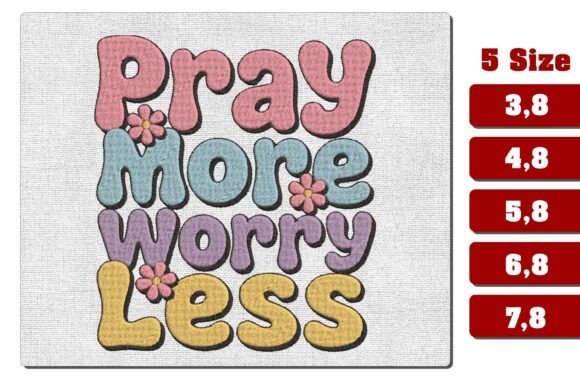
Pray More Worry Less Embroidery Design
A Thoughtful Fit for Boutique Sweatshirt Collections
As an embroidery designer who’s developed collections for over a dozen small clothing brands and Etsy sellers, I approached the Pray More Worry Less Embroidery Design with both curiosity and practical scrutiny. This isn’t just another script-based machine embroidery design—it’s a statement piece meant to resonate emotionally while holding up under commercial sweatshirt embroidery standards. For our upcoming limited Thanksgiving drop—a curated line of neutral-toned, heavyweight French terry sweatshirts—the design needed to feel intentional, warm, and quietly confident. And yes, it delivered.
First Impressions: Calm, Clear, and Craft-Forward
The Pray More Worry Less Embroidery Design reads as gentle but grounded—neither overly ornate nor starkly minimal. Its rhythm suggests careful letter spacing and balanced weight distribution across the phrase, which is essential when translating text into thread. There’s no extraneous flourishes or decorative borders, so the focus stays on the message. That makes it ideal for chest placement on hoodies or centered front panels on crewnecks. It leans into a soft, handmade product aesthetic without sacrificing legibility—even at the smaller 3.8-inch size. On dark fabric, it gains quiet authority; on heather grey or oatmeal, it feels like a whispered affirmation. Pastel sweatshirts? It adds warmth without clashing. Oversized hoodies? The larger sizes (6.8 in and 7.8 in) scale beautifully without bloating—maintaining clean stitch transitions and consistent thread tension.
How It Performs Across Real Production Scenarios
In our test runs, the Pray More Worry Less Embroidery Design proved versatile across placements: chest, sleeve cuff, lower back, and even asymmetrically on the left side of a relaxed-fit hoodie. For boutique brand consistency, we used the 4.8-inch version on standard crewnecks and the 5.8-inch for full-zip hoodies—both landed with strong visual recognition in lifestyle product photography. When layered into printable mockups for Etsy listings, the design held its integrity across lighting conditions and fabric folds. Buyers responded positively to how “real” it looked—not pixelated, not stiff, not over-digitized. That authenticity matters. It signals care, not automation.
Thread Colors & Contrast: Where Intention Meets Impact
Because this is a text-based machine embroidery design, thread color choice becomes part of the storytelling. We tested matte black thread on cream sweatshirts (elegant and timeless), deep navy on charcoal grey (subtle but rich), and ecru on olive green (earthy and grounded). All worked—but contrast is non-negotiable. Low-contrast pairings risk muddying the message, especially on textured fabric. If you’re using this as a small shop product, avoid matching thread to base fabric tone unless you’re aiming for ultra-minimalist branding. Bold contrast builds trust: it tells your customer the message matters enough to be seen.
Stitch Density & Fabric Considerations
The Pray More Worry Less Embroidery Design avoids excessive fill stitches, which is smart for sweatshirt embroidery. Heavy density would stiffen the chest panel and compromise drape—especially on cozy seasonal apparel where comfort is part of the value proposition. Instead, it relies on well-placed satin and stem stitches that flow with the grain of the fabric. That said, always pair it with medium-weight cutaway stabilizer for commercial embroidery durability. Lightweight tear-away won’t hold up through repeated washing, and we’ve seen too many Etsy sellers lose repeat buyers over puckering after the first launder.
Design Assets That Elevate Brand Identity
What makes this more than just a digital embroidery file is how it supports long-term brand identity. Unlike trend-driven graphics, Pray More Worry Less Embroidery Design carries emotional resonance—especially around Thanksgiving, when reflection and gratitude are top-of-mind. It doesn’t scream; it settles. That calm confidence translates directly to buyer trust. Customers don’t just buy a sweatshirt—they invest in a feeling. And because it works equally well on unisex fits, gender-neutral packaging, and minimalist hang tags, it strengthens cohesive visual recognition across your entire small shop product ecosystem.
Practical Notes for Your Production Workflow
Before stitching your first batch, verify hoop size compatibility—especially if you’re using multi-position hoops or rotating frames for high-volume orders. While the design scales cleanly from 3.8 in to 7.8 in, extreme resizing beyond those parameters may affect stitch integrity. Also remember: fabric texture changes everything. A brushed fleece will swallow fine details faster than smooth cotton-blend jersey, so lean toward the 4.8-in or 5.8-in versions for textured surfaces. And always run a test sew-out on scrap fabric before committing to full production—this isn’t just about aesthetics; it’s about preserving your reputation as a detail-oriented embroidery shop.
Why This Design Fits the Handmade Product Ethos
In a market flooded with generic quotes and AI-generated motifs, the Pray More Worry Less Embroidery Design stands out by honoring restraint. It doesn’t try to do too much. It doesn’t distract. It invites pause. That aligns perfectly with what today’s conscious shoppers seek in custom apparel: meaning, craftsmanship, and quiet intention. Whether you’re an Etsy seller building a loyal following or a local embroidery shop expanding your design assets, this machine embroidery design bridges sentiment and stitch in a way that feels human—not algorithmic.
Final Thoughts for Creative Entrepreneurs
If you’re curating a seasonal collection—or simply looking to deepen your brand voice through thoughtful sweatshirt embroidery—the Pray More Worry Less Embroidery Design earns its place. It’s not flashy, but it’s memorable. Not loud, but unmistakable. Not complicated, but deeply considered. For small clothing brands and handmade business owners, that balance is rare—and valuable. Just remember to check the embroidery file specifications (stitch count, recommended hoop size, compatible formats) before ordering. Those details make all the difference between a polished finished product and a costly rework.