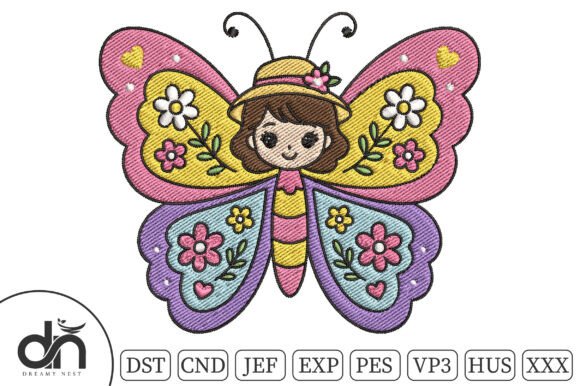
Kawaii Flower Butterfly Girl Embroidery
A Playful Yet Polished Brand Asset for Small Business Merch
As an embroidery designer who’s developed hundreds of commercial designs for cafés, boutiques, florists, and handmade brands, my first impression of Kawaii Flower Butterfly Girl Embroidery is immediate: it’s warm, intentional, and emotionally resonant—not just decorative. The title and description signal a clear visual language: soft curves, nature-inspired whimsy, and kawaii charm that reads as friendly without sacrificing polish. It doesn’t feel like generic clip art or over-saturated digital filler. Instead, it lands as a cohesive machine embroidery design built for storytelling—ideal for businesses wanting to express creativity, care, and approachability through custom apparel and branded patches.
Where This Design Shines in Real Business Applications
Kawaii Flower Butterfly Girl Embroidery excels where personality meets practicality. On an apron for a local flower shop or bakery, it adds gentle distinction without overwhelming the garment’s function. As a 2.5” embroidered patch on tote bags for a creative studio, it becomes a tactile signature—inviting touch and recognition. For cap embroidery on staff uniforms at a children’s boutique or indie pet brand, its balanced proportions hold up well on the curved front panel when digitized with appropriate underlay and pull compensation.
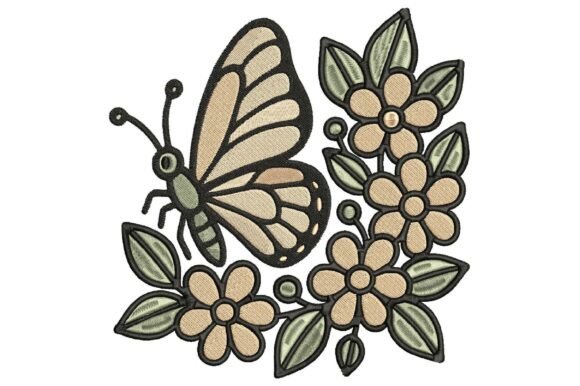
It also works beautifully as a sleeve detail on work shirts or a subtle chest accent on linen-blend tees—enhancing perceived value without shouting. Because the motif blends organic flow (butterfly wings, floral elements) with clean line work, it translates smoothly into printable mockups for Etsy sellers and small business owners previewing their merch lineup. As part of a broader set of design assets, it complements minimalist typography or hand-lettered logos—never competing, always harmonizing.
Careful Considerations for Production Success
That said, Kawaii Flower Butterfly Girl Embroidery isn’t universally plug-and-play. Its delicate outlines and layered floral details mean stitch density matters—especially at smaller sizes. I recommend testing it first as a 1.75” embroidered patch: if fine wing veins or tiny petals blur or “fill in,” adjust density or simplify outlines before mass production. Cap embroidery demands extra attention—curved surfaces exaggerate thread buildup, so verify that the butterfly’s antennae or flower centers don’t stitch too densely near the edge.
Dark uniforms? Prioritize high-contrast thread colors—think blush pink on navy or mint green on charcoal—to preserve legibility. Avoid placing it on heavily textured fabric (like bouclé or thick terry) unless paired with cutaway stabilizer and reduced top tension. And while the design feels inherently handmade, remember: frequent washing can stress fine details. Recommend it for low-friction placements (e.g., upper back of a tote, left chest of a lightweight shirt) rather than high-abrasion zones like pocket flaps or waistbands.
How It Shapes Brand Identity and Customer Trust
For small businesses, every embroidered element contributes to brand identity. Kawaii Flower Butterfly Girl Embroidery signals warmth, attention to detail, and a human-centered aesthetic—qualities that build trust with customers seeking authenticity. A florist using it on staff aprons tells clients, “We celebrate beauty gently.” A craft studio applying it to customer gift tags says, “Your experience is thoughtfully curated.” Unlike generic bug-themed motifs (this falls under Bugs, yes—but not in a literal, entomological way), this design leans into emotional resonance over taxonomy.
Visually, it strengthens consistency across touchpoints: same design on a cap, tote bag design, and product packaging accent creates cohesion. And because it avoids cliché, it elevates perceived product value—making handmade goods feel more intentional, not just charming. Buyers engage longer with merchandise that balances playfulness and polish—and Kawaii Flower Butterfly Girl Embroidery delivers that balance reliably.
Practical Designer Notes Before You Stitch
Before committing to production, run these checks:
- Test in black and white first—verify silhouette clarity and spacing between elements (e.g., wing separation, flower stem clearance).
- Confirm small-patch viability: resize to your target patch dimensions (commonly 1.5”–2.25”) and inspect for lost detail or thread nesting.
- Review thread color contrast on your base fabric—especially for dark or heathered materials.
- Inspect spacing and underlay: tight curves around the butterfly’s head or layered petals need proper under-stitching to prevent puckering.
- Confirm hoop size compatibility—if your machine uses smaller hoops, ensure the design fits without re-hooping mid-stitch.
- Test on real fabric with your intended stabilizer combo—especially for stretchy or slippery textiles.
- Create a physical mockup for client approval before bulk runs—digital previews rarely capture texture and drape.
- Compare alongside other design assets: does it align tonally with your logo, typography, and overall merch palette?
- Verify commercial licensing before use in small business merch, commercial embroidery, or resale items—since the listing mentions “Machine Embroidery,” confirm permissions cover your intended use case.
While the product description doesn’t specify file formats, stitch count, or exact hoop requirements, those are non-negotiable details for professional output. Always request them from the seller—or consult your digitizer—if adapting Kawaii Flower Butterfly Girl Embroidery for unique applications like apron embroidery or custom tote bag design.
Final Thought: A Strategic Choice, Not Just a Cute One
Kawaii Flower Butterfly Girl Embroidery is more than a whimsical motif—it’s a versatile, emotionally intelligent tool for building memorable small business merch. When applied intentionally—with attention to fabric, scale, and context—it strengthens brand voice, invites connection, and elevates everyday items into keepsakes. Whether you’re an embroidery shop sourcing reliable digital embroidery files, an Etsy seller curating signature packaging, or a café owner stitching joy onto staff uniforms, this design earns its place—not because it’s trendy, but because it’s thoughtful, adaptable, and authentically kind.