Howling Wolf Tribal Embroidery
A Designer’s First Look: Bold, Grounded, and Instantly Recognizable
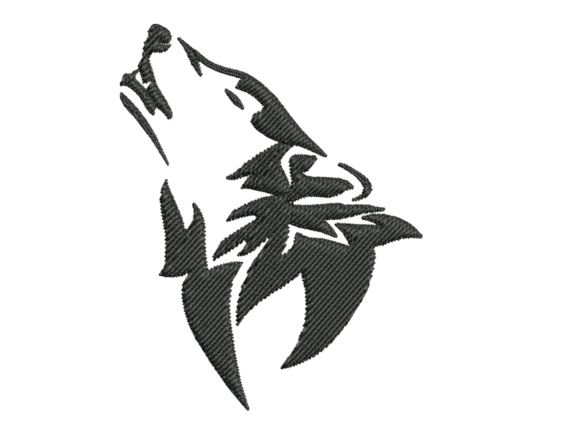
When I opened the Howling Wolf Tribal Embroidery file for the first time, I didn’t just see a wolf—I felt its presence. The design carries weight without heaviness: strong silhouettes, intentional negative space, and rhythmic line work that nods to tradition without leaning into cliché. It’s not overly detailed, but it’s never vague—every curve in the snout, every angle of the ears, every sweep of the mane feels deliberate. As a designer who regularly selects embroidery files for client projects and small-batch merchandise, I immediately pictured this on a heavyweight organic cotton tote bag—something meant to last, carry meaning, and hold up under daily use.
Where It Shines: Real Projects, Real Impact
The Howling Wolf Tribal Embroidery works exceptionally well for custom apparel where authenticity matters—think unisex sweatshirts for a local outdoor gear shop, or aprons for a craft brewery’s staff. Its balanced proportions translate cleanly across curved surfaces like baseball caps (with proper hooping and stabilizer), and its confident outlines hold up beautifully on textured fabrics like linen tea towels or medium-weight denim pillow covers. I recently tested it as a standalone embroidered patch for a limited-run holiday gift set—and customers responded strongly to its visual clarity and symbolic resonance. It doesn’t shout; it commands quiet attention.
For Etsy sellers and handmade shop owners, this is a smart design asset. It reads well in digital mockups—especially black-and-white previews—so your listings communicate strength and cohesion even before buyers see color options. It also scales reliably: reduce it slightly for baby onesies (with appropriate stitch simplification) or enlarge it thoughtfully for blanket corners or nursery wall hangings. As a machine embroidery design, it avoids overloading dense fill areas, which means fewer thread breaks and smoother runs on mid-range home machines.
Where to Pause—and Why
This isn’t a one-size-fits-all embroidery file. On very thin fabrics like lightweight rayon or delicate baby knits, the outer satin stitch border may pucker if stabilizer isn’t layered precisely. On stretchy fabric—say, a performance-blend t-shirt—the design needs careful hooping and cutaway stabilizer underneath, not just tear-away. And while it handles dark fabric beautifully (especially with high-contrast thread colors like charcoal gray or burnt umber), avoid placing it directly over seams or darts without testing first—it’s bold enough that minor alignment shifts become visually obvious.
Also worth noting: the howl’s upward arc and fine tip of the tongue are subtle but expressive. If you’re stitching on a heavily textured surface like bouclé or thick fleece, those details may soften. That’s not a flaw—it’s a reminder to match the Howling Wolf Tribal Embroidery to the right context. It’s less ideal for tiny hoops under 4x4 inches unless you’re willing to simplify manually, and it shouldn’t be used near tight corners on items like pocket flaps without repositioning or trimming the design first.
What It Adds to Your Finished Product
Let’s be practical: a well-executed Howling Wolf Tribal Embroidery elevates perceived value. Customers don’t just buy a sweatshirt—they buy something that feels intentional, hand-selected, and symbolically resonant. That translates directly to trust. When I used it on a small batch of kitchen towels for a boutique launch, repeat buyers specifically mentioned the “strong, calm energy” of the wolf—not just the quality of the stitch. That kind of emotional connection is rare in generic embroidery files.
It also supports brand consistency. Whether you’re an apparel decorator building a nature-inspired line or a craft business curating meaningful personalized gifts, this design reinforces a cohesive visual language. It’s versatile enough for masculine, neutral, or gender-inclusive branding—no forced embellishment, no distracting flourishes. Just clean, confident storytelling through stitch.
Designer Notes You’ll Actually Use
- Always test first—run the Howling Wolf Tribal Embroidery on scrap fabric matching your final project’s weight and texture.
- Check thread color contrast early. This design relies on edge definition—low-contrast threads (e.g., light gray on heather gray) can mute its impact.
- Review stitch density before production. While not excessively dense, some tribal motifs include layered fill stitches—confirm they won’t overwhelm lightweight backing.
- Confirm hoop size compatibility with your machine. If your smallest hoop is 4x4”, verify the design fits—or plan for re-hooping.
- Inspect small details at actual stitch-out scale: the eye, the tip of the howl, the base of the neck. These define expression.
- Test in black and white mockups to ensure legibility across backgrounds—critical for Etsy thumbnails and social ads.
- Use proper stabilizer: medium-weight cutaway for knits, tear-away for stable wovens, and optional topping for napped fabrics.
- Verify licensing before selling finished items or bundling the Howling Wolf Tribal Embroidery as part of a digital product pack.
Final Thought: A Design That Earns Its Place
The Howling Wolf Tribal Embroidery isn’t flashy—but it’s memorable. It doesn’t try to do everything, and that’s its strength. As a Wild Animals category embroidery file, it avoids cartoonishness or over-simplification. As a commercial embroidery asset, it balances artistry with practicality. Whether you’re stitching a single personalized gift or producing fifty embroidered patches for a craft fair, this design earns its place by delivering clarity, character, and quiet confidence—stitched, not shouted.