Cats with Scarf – Outline Embroidery
A Designer’s First Look: Charm, Clarity, and Quiet Warmth
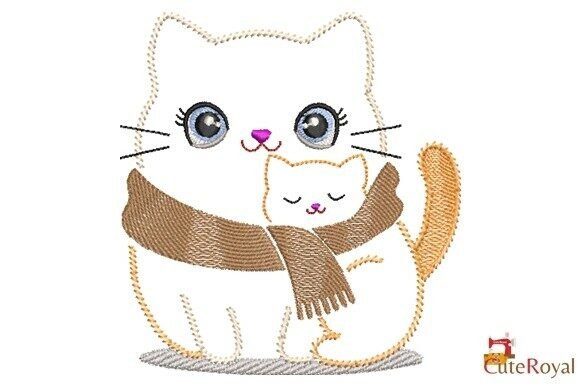
Opening Cats with Scarf – Outline Embroidery feels like unrolling a quiet sketch—two cats nestled close, sharing a soft scarf in clean, confident lines. There’s no fill, no heavy satin stitch, just intentional contouring that breathes space and gentleness. It reads as artistic, not childish; tender, not cutesy. For a personalized gift shop, that nuance matters deeply. Customers don’t just buy cats—they buy comfort, companionship, nostalgia, or the quiet joy of shared stillness. This design delivers all three without shouting. Its outline style leans into handmade authenticity while staying crisp enough for professional presentation.
Where This Design Truly Shines
Cats with Scarf – Outline Embroidery is a versatile anchor for emotionally resonant products. On a baby blanket? It whispers “safe,” “loving,” “gentle”—ideal for newborn photo props or keepsake quilts. As a wedding gift stitched onto a linen pillow cover? It suggests enduring partnership and quiet devotion—not florals or monograms, but something softer, more personal. For an Etsy seller curating nursery decor, it elevates a simple muslin wall hanging into a focal point. And on a custom tote bag for a cat-loving teacher or therapist? It adds warmth without clutter.
- Baby embroidery: Works beautifully on organic cotton blankets, swaddles, and onesie pockets—provided stitching stays away from seams and high-friction zones.
- Wedding gift: Perfect for embroidered handkerchiefs, guestbook covers, or honeymoon pillowcases—especially when paired with subtle thread colors like heather gray or oatmeal.
- Personalized towel: A standout on flour-sack or waffle-weave kitchen towels where line art reads clearly against texture.
- Pillow cover & apron: Holds its shape well on medium-weight cotton-linen blends—no distortion, no visual heaviness.
- Nursery decor & craft fair products: Prints cleanly in digital mockups and photographs with natural light, helping small shop products stand out in crowded feeds.
Where to Proceed Thoughtfully
This isn’t a one-size-fits-all embroidery file—and that’s part of its integrity. Because it’s an outline design, fine details rely entirely on stitch precision and fabric behavior. Avoid placing Cats with Scarf – Outline Embroidery on:
- Stretchy baby clothes (like knit bodysuits) unless stabilized heavily and tested—lines can skew during hooping or wear.
- Thick, napped towels where dense pile may obscure delicate contours—opt instead for lighter weaves.
- Curved surfaces (e.g., mugs, curved tote straps) unless using specialty hoops or alternative application methods.
- Dark fabric without contrast testing—light thread on black can fade visually; always preview with actual thread colors.
- Products requiring frequent washing (like dish towels) unless using high-retention threads and secure backing—outline work has less surface area for abrasion resistance.
Also note: There’s no built-in text—so if you’re adding names or dates for personalization, treat lettering as a separate layer and confirm legibility at your intended size.
Why It Builds Trust—and Sales
Customers choosing personalized gifts aren’t just buying objects—they’re investing emotion. Cats with Scarf – Outline Embroidery supports that intention. Its restrained elegance signals care, not mass production. When photographed on a folded linen pillow or draped over a wooden rocking chair, it invites pause. That pause translates to longer dwell time, saved images, and higher perceived value—even before pricing is seen. For Etsy sellers and small shop owners, that emotional resonance builds repeat trust: buyers remember how a piece *felt*, not just how it looked.
It also streamlines your workflow. Because it’s low-density and outline-based, it stitches quickly, reduces thread breaks, and minimizes rehooping on multi-item orders. That efficiency shows up in faster turnaround times and fewer customer service queries about stitch quality.
Practical Notes Every Embroiderer Should Run Before Stitching
Before sending Cats with Scarf – Outline Embroidery to your machine—or listing it as a finished product—run these checks:
- Test on scrap fabric matching your final substrate (e.g., terry cloth for towels, brushed cotton for blankets).
- Confirm thread color contrast—especially on off-whites, creams, or charcoal—using real spools, not screen previews.
- Verify hoop size compatibility with your frame and garment placement (e.g., center chest vs. corner of a tote).
- Review stitch density: outline designs should feel fluid, not scratchy—adjust tension if lines appear broken or fuzzy.
- Use appropriate stabilizer: tear-away for stable wovens, cut-away for knits, and lightweight mesh for sheer fabrics.
- Compare light/dark fabric mockups side-by-side—not just digitally, but stitched—to assess balance and clarity.
- Inspect small details post-stitch: ears, scarf ends, and connecting curves should read cleanly, not merge or feather.
- Confirm commercial licensing before selling finished products—this is a digital embroidery file, and usage rights vary by vendor.
Final Thought: A Design That Sells Itself—When Used With Intention
Cats with Scarf – Outline Embroidery won’t dominate a shelf—but it will linger in memory. It’s the kind of machine embroidery design that turns a standard pillow cover into a cherished heirloom, a kitchen towel into a conversation starter, or a baby blanket into a quiet promise. For embroidery makers, gift shop owners, and handmade sellers, it’s not just another file. It’s a thoughtful tool—one that rewards attention to detail, fabric choice, and emotional context. Use it with care, test with honesty, and let its gentle charm do the rest.