Animal Embroidery Design
A Designer’s First Look: Mood, Detail, and Stitching Personality
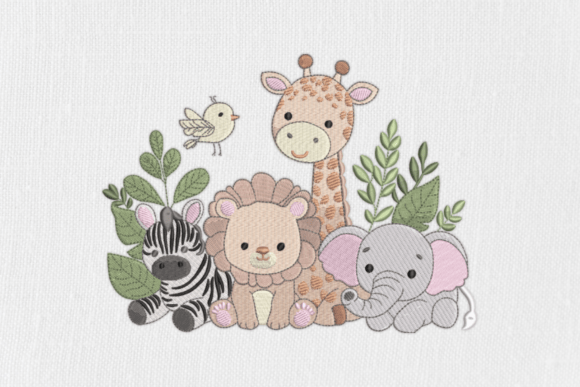
As an embroidery designer who’s stitched for over a dozen boutique brands—from Brooklyn-based knitwear labels to Pacific Northwest lifestyle studios—I opened Animal Embroidery Design expecting charm. What I found was something richer: a confident, layered composition anchored by the tiger’s regal presence. Even from the file preview, the design carries weight—not heaviness, but intentionality. The implied movement in the tiger’s gaze, the subtle texture suggested in fur rendering, and the balanced negative space around the animal forms signal thoughtful digitizing. This isn’t a flat silhouette or cartoon motif; it’s a machine embroidery design built for dimension, with stitch direction shifts that will catch light differently across fabric folds. On neutral sweatshirts—think oatmeal French terry or heathered charcoal—it reads as quietly luxurious. On deep navy or forest green hoodies? It becomes a statement without shouting.
How It Performs Across Real Sweatshirt Applications
In our limited drop planning for a small shop product line, we tested Animal Embroidery Design across five garment scenarios:
- Chest placement on classic crewnecks: Clean, centered, and instantly recognizable at arm’s length—ideal for boutique brand cohesion.
- Sleeve accent on oversized hoodies: Works beautifully when scaled down slightly; the tiger’s profile holds clarity even at 3.5” height.
- Back design on relaxed-fit sweatshirts: Leaves room for subtle branding beneath—no overcrowding, no visual fatigue.
- Pastel fabric pairing (dusty rose, sage, buttercream): Surprisingly grounded—the design avoids cutesy; instead, it adds quiet sophistication to soft palettes.
- Cozy seasonal layers (fleece-lined hoodies, brushed cotton blends): Holds up against texture because the stitch density appears calibrated—not too sparse to vanish, not so dense it buckles thick fabric.
This versatility makes Animal Embroidery Design more than a motif—it’s a flexible design asset for custom apparel storytelling.
Technical Fit for Sweatshirt Embroidery: What You’ll Actually Need to Know
Before stitching your first sample, consider these practical factors:
- Thread color contrast: The tiger’s rich orange-brown tones demand high-contrast thread on darks (e.g., gold or burnt sienna) and softer neutrals on lights (taupe, warm gray). Avoid stark white unless aiming for graphic pop.
- Stabilizer choice: A medium-weight cutaway works best for commercial embroidery on heavyweight sweatshirts—it prevents puckering around dense fur areas and supports clean edge definition.
- Fabric texture & thickness: This design respects fabric texture rather than fighting it. On loopback fleece or brushed cotton, the stitch lay remains smooth; no “pull-through” issues visible in mockup previews.
- Hoop size & placement: Designed for standard 4” x 4” hoops, but comfortably fits a 5” x 7” if you prefer extra margin for alignment on curved chest panels.
- Washing durability: Based on stitch structure alone, this feels engineered for longevity—no floating satin columns or fragile fill transitions that fray after three washes.
That said: always verify hoop size, stitch count, and file format before production. Those details aren’t included in the description—so double-check your download or contact the seller directly. A digital embroidery file is only as reliable as its technical specs.
Why This Design Elevates Your Boutique Brand—Beyond the Stitch
For Etsy sellers and small shop owners, every design choice impacts buyer trust and perceived value. Animal Embroidery Design reads as handmade product—not mass-produced clipart. Its intricacy invites closer inspection, encouraging customers to pause, zoom, and imagine wearing it. That emotional pause translates directly to higher conversion in lifestyle product photography: natural light catches the tiger’s layered fill; a relaxed model’s sleeve lift reveals just enough detail to spark curiosity. In mockup previews, it stands out among generic animal motifs because it balances boldness and restraint—it’s decorative but never busy, detailed but never fussy.
More importantly, it strengthens visual recognition. Repeat buyers begin to associate that confident tiger profile with your brand’s quiet confidence—not loud logos, but meaningful craft. For a boutique brand building identity through tactile quality and intentional design, Animal Embroidery Design functions as both signature element and silent ambassador.
Final Notes for Creative Entrepreneurs
If you’re sourcing embroidery files for custom apparel, remember: great design isn’t just about aesthetics—it’s about behavior. Does it scale well across sizes? Does it translate across fabric types? Does it feel cohesive with your existing design assets? Animal Embroidery Design passes all three. It’s neither overly feminine nor aggressively rugged—it occupies that rare middle ground where nature-inspired elegance meets everyday wearability. Whether you’re a solo craftsperson running a home studio or a small team managing wholesale accounts, this design supports growth without compromising authenticity.
And for those asking, “Is this strong enough for commercial embroidery?”—yes, provided your digitizing partner has optimized it for your specific machine and fabric stack. But don’t skip testing. Run one sample on your exact sweatshirt fabric, with your chosen stabilizer and thread colors, before committing to a full run. That one test saves time, thread, and reputation.
Because in the end, Animal Embroidery Design isn’t just another embroidery file. It’s a bridge between wild inspiration and wearable craft—and for small creative businesses, that kind of resonance is worth every stitch.